Things I Discovered #56
The Rule of 50 for reading, a summery Churpi salad, a short story i loved, why Macbeth is really about hospitality, gourmet popcorn finds, Susan Sontag on becoming, a Spanish Word of the Week & more!
How to Remember What You Read - Do you ever finish a book and forget everything? Well the problem isn’t what you read, it’s how you read! From the idea that “speedreading is bullshit” to the reminder that active readers build mental models that make future learning easier, this article is packed with insights on reading with intention. A must-read for anyone who wants to actually remember what they read!
My favorite part is the notion that “every great book is a treasure map to the self” but only if you know how to read it right. I also loved Nancy Pearl’s Rule of 50 which has an interesting feature: once you are over the age of 50, subtract your age from 100 and read that many pages. Pearl writes (and this quote really cracked me up):And if, at the bottom of Page 50, all you are really interested in is who marries whom, or who the murderer is, then turn to the last page and find out. If it’s not on the last page, turn to the penultimate page, or the antepenultimate page, or however far back you have to go to discover what you want to know… When you are 51 years of age or older, subtract your age from 100, and the resulting number (which, of course, gets smaller every year) is the number of pages you should read before you can guiltlessly give up on a book…When you turn 100, you are authorized (by the Rule of 50) to judge a book by its cover.
Frankenstein by Guillermo del Toro - A solid watch overall. Jacob Elordi is fantastic as the Creature, and Oscar Isaac brings real intensity to Victor Frankenstein. Fun fact: when Mary Shelley first wrote Frankenstein, she was just 18, and the story came to her in a dream during a ghost-story competition with Percy Shelley, John Polidori, and Lord Byron!
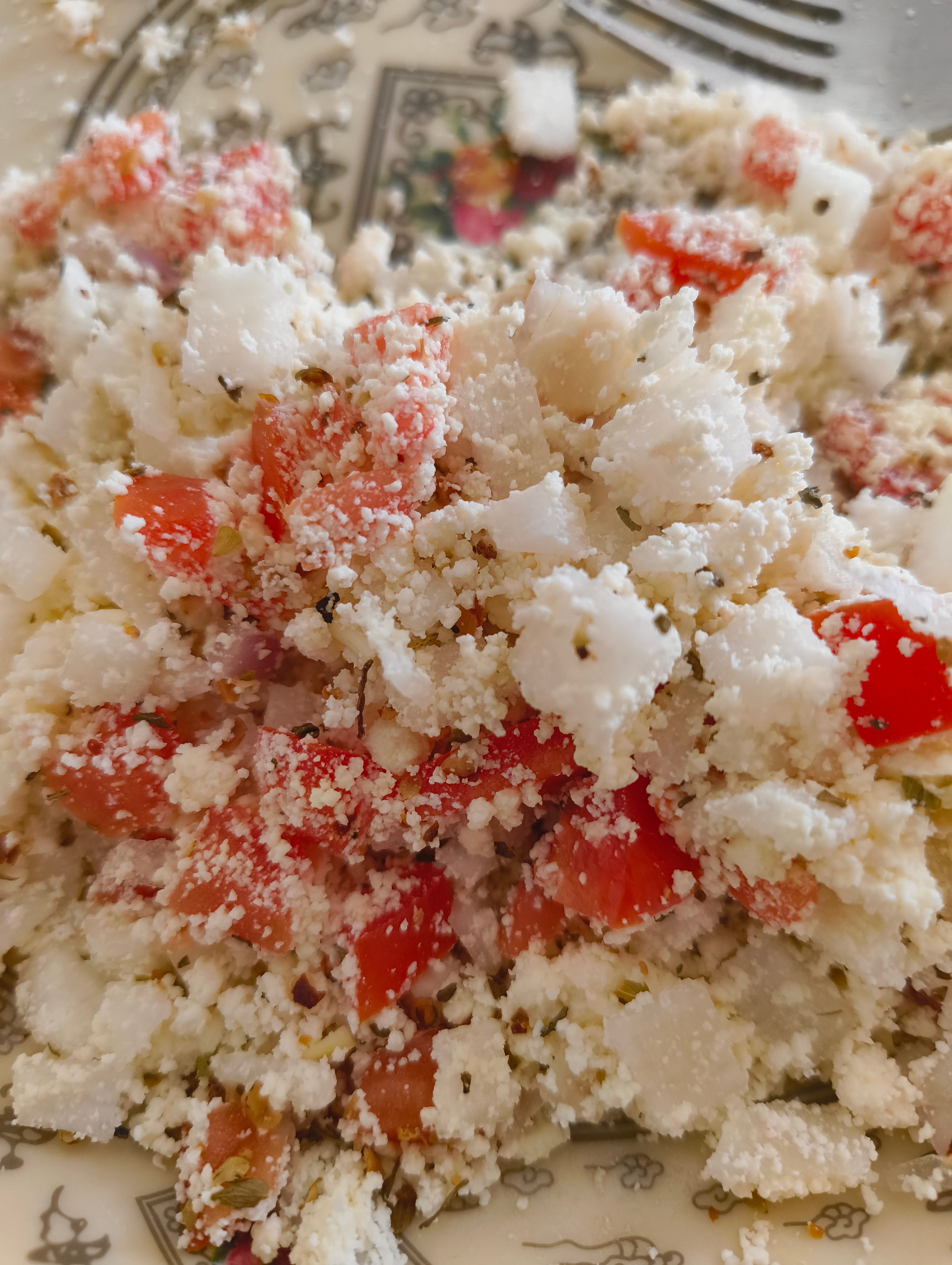
Churpi Salad - I made myself a light, summery salad with soft churpi (a local cheese that tastes a lot like feta). It’s perfect if you love fresh, seasonal ingredients and don’t want to spend more than 10 minutes putting together a healthy, refreshing meal. Recipe:
Chop up some onion, tomato, cucumber, and radish. Add chunks of churpi. Sprinkle salt and oregano to taste, then garnish with roasted peanuts and a squeeze of lemon juice.
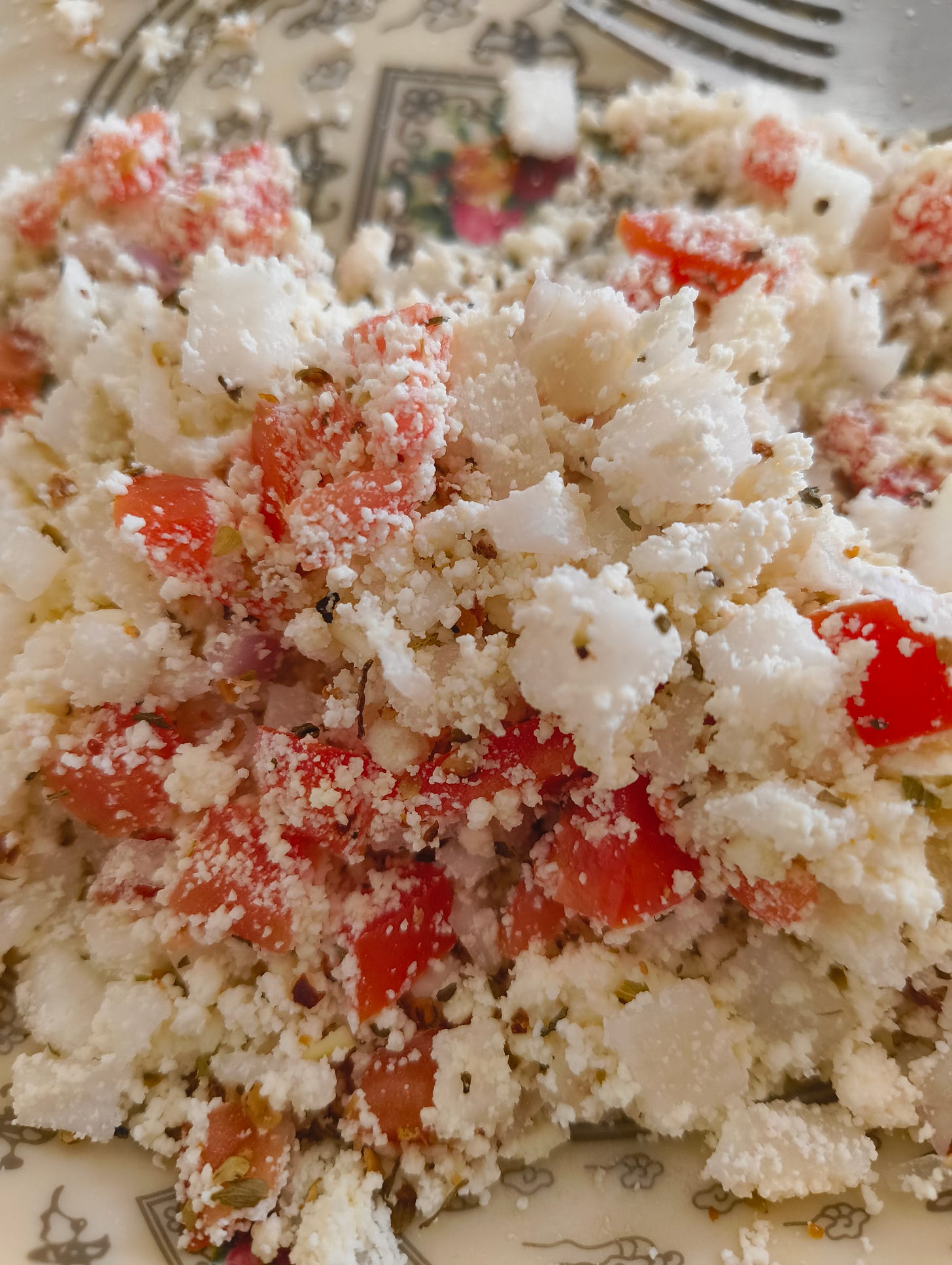
not the best picture, but i hope you get the point :) The Answer Is No - I loved this short story by Fredrik Backman! It’s on Audible for just 67 bucks. It’s about a young man whose quiet life unravels after his apartment board questions him about a missing frying pan. It’s got classic Backman humor with sharp insights on human nature. Go listen to it right away!
Macbeth is not about ambition but hospitality gone wrong - This video dives into how the play’s infamous banquets, feasts, and Lady Macbeth’s chilling brand of “hosting” is what drives the play. It also explores some fascinating historical ideas on hospitality and power.
Salman Rushdie interview with Sam Fragoso - Fun interview where Rushdie talks about his life and his latest book The Eleventh Hour, a collection of five interlinked short stories. Can’t wait to read it!
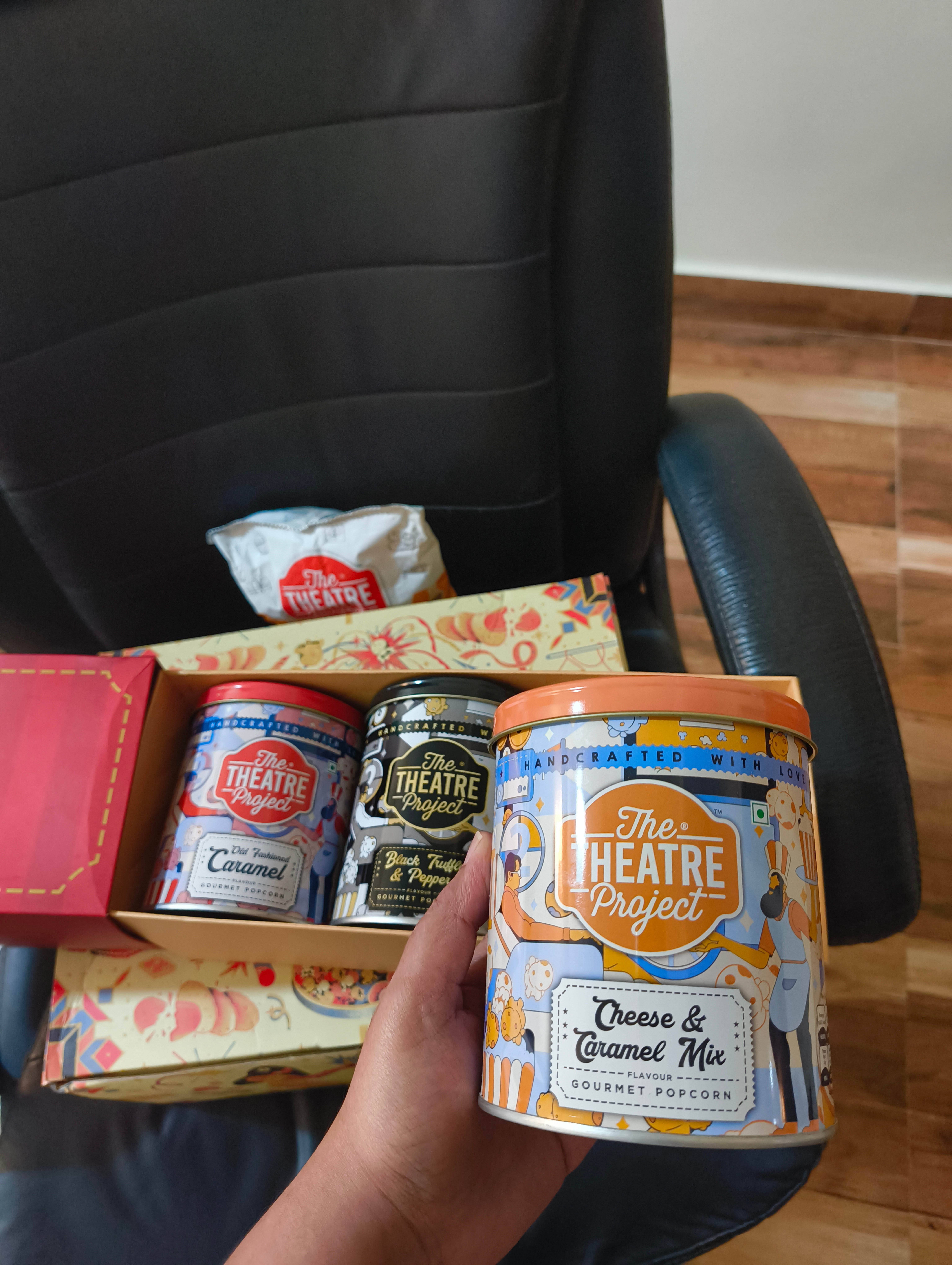
The Theatre Project - This Bombay-based brand makes some seriously good gourmet popcorn, and they ship pan-India. Worth checking out!
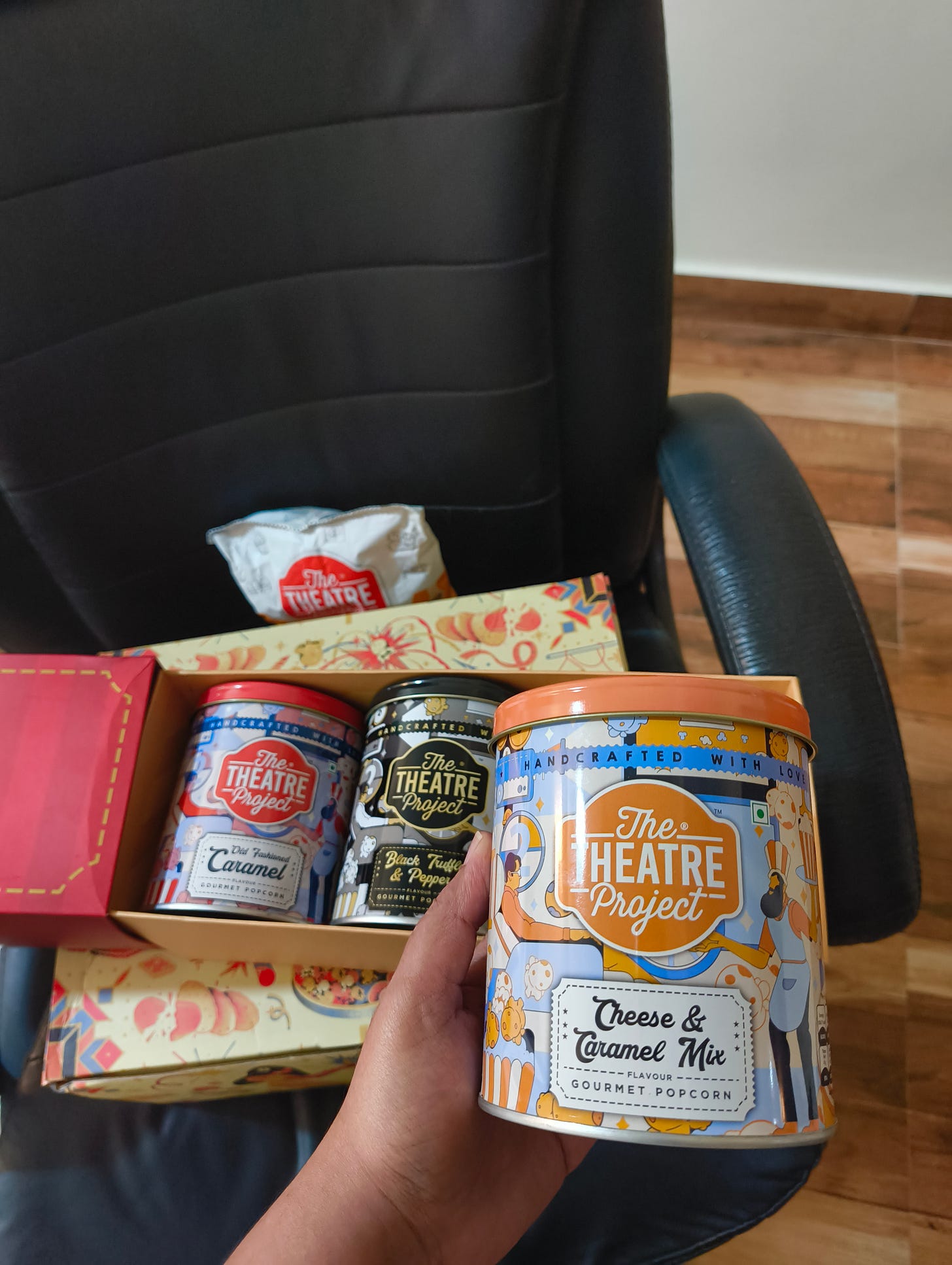
no one can eat just one! Let It Be by The Beatles and Let It Bleed by The Rolling Stones is what I’ve been listening to this week!
Reborn: Journals and Notebooks, 1947–1963 - This is the first of three volumes of edited selections from Susan Sontag’s journals, covering her life from age fourteen to thirty. Edited by her son, David Rieff, these entries are raw, brilliant, and full of that restless hunger to become. You can almost see her building herself line by line - questioning, contradicting, reinventing. One moment she’s a self-conscious teenager trying to sound profound; the next, she’s declaring, “I must change my life so that I can live it, not wait for it.” I leave you with some excerpts from her journals:
4/13/48
Ideas disturb the levelness of life.
9/4/56Whoever invented marriage was an ingenious tormentor. It is an institution committed to the dulling of the feelings. The whole point of marriage is repetition. The best it aims for is the creation of strong, mutual dependencies. Quarrels eventually become pointless, unless one is always prepared to act on them— that is, to end the marriage. So, after the first year, one stops “making up” after quarrels—one just relapses into angry silence, which passes into ordinary silence, and then one resumes.
11/19/59The coming of the orgasm has changed my life. I am liberated, but that’s not the way to say it. More important: it has narrowed me, it has closed off possibilities, it has made alternatives clear and sharp. I am no longer unlimited, i.e., nothing.
Sexuality is the paradigm. Before, my sexuality was horizontal, an infinite line capable of being infinitely subdivided. Now it is vertical; it is up and over, or nothing.
The orgasm focuses. I lust to write. The coming of the orgasm is not the salvation but, more, the birth of my ego. I cannot write until I find my ego. The only kind of writer [I] could be is the kind who exposes himself … To write is to spend oneself, to gamble oneself. But up to now I have not even liked the sound of my own name. To write, I must love my name. The writer is in love with himself … and makes his books out of that meeting and that violence.
12/24/59
My desire [SS first wrote “need,” then crossed it out] to write is connected with my homosexuality. I need the identity as a weapon, to match the weapon that society has against me. It doesn’t justify my homosexuality. But it would give me—I feel—a license.Word of the Week: Guachapeo (Spanish) - The sound of footsteps splashing through mud or puddles.
Each step through the flooded lane made a soft guachapeo, as if the earth itself was laughing.
The poet walked home in the storm, loving the guachapeo more than the poem he was trying to write.
My childhood sounded like guachapeo.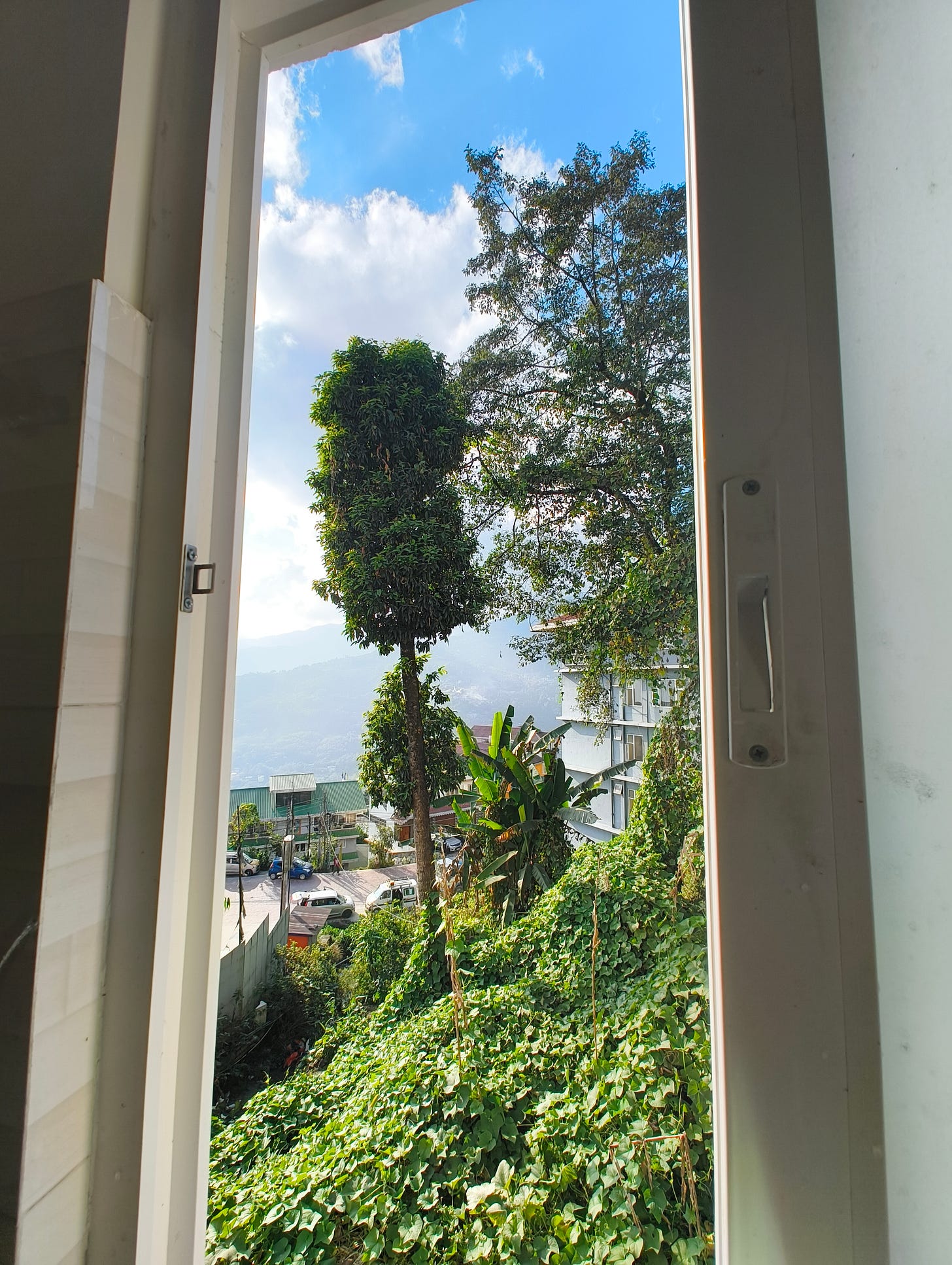
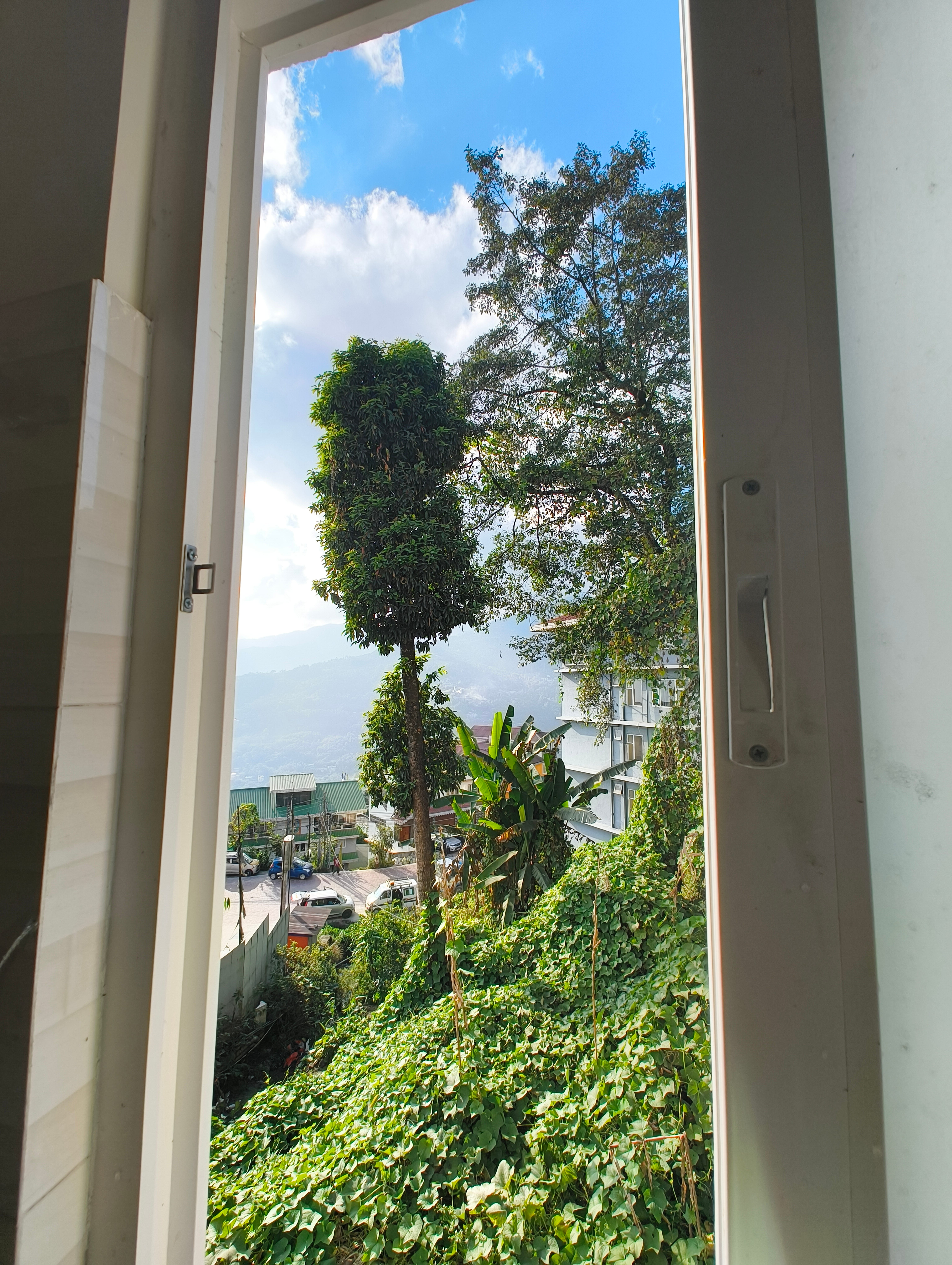
view from my window today afternoon. have a great week :)